The Congo Basin, home to one of the world’s largest tropical forest ecosystems, plays a critical role in global climate regulation and biodiversity conservation. Indigenous Peoples and local communities have long served as the primary custodians of these territories by sustaining forests, protecting biodiversity, and preserving knowledge systems rooted in generations of lived experience.
Over the past four years, the partnership between REPALEAC, Rights and Resources Initiative, and CLARIFI has delivered measurable impact across the region. Partners have advanced tenure security for approximately 1.4 million hectares and strengthened governance systems across 17.36 million hectares in Gabon, the Democratic Republic of the Congo, and the Republic of the Congo. This includes progress in rights-based conservation monitoring, community training, and livelihood support.
Building on these achievements, the partnership is also advancing REPALEAC’s 2030 Vision and broader regional advocacy goals. By 2030, the aim is clear. Indigenous Peoples and local communities across the Congo Basin should be fully recognized and supported through coordinated partnerships and sustained financing that secure rights and deliver climate and biodiversity outcomes. This includes securing tenure rights for an additional 6 million hectares and expanding governance support to communities across the Basin. Achieving this goal requires stronger and more diversified donor investment, with particular attention to direct support for women and youth-led organizations.
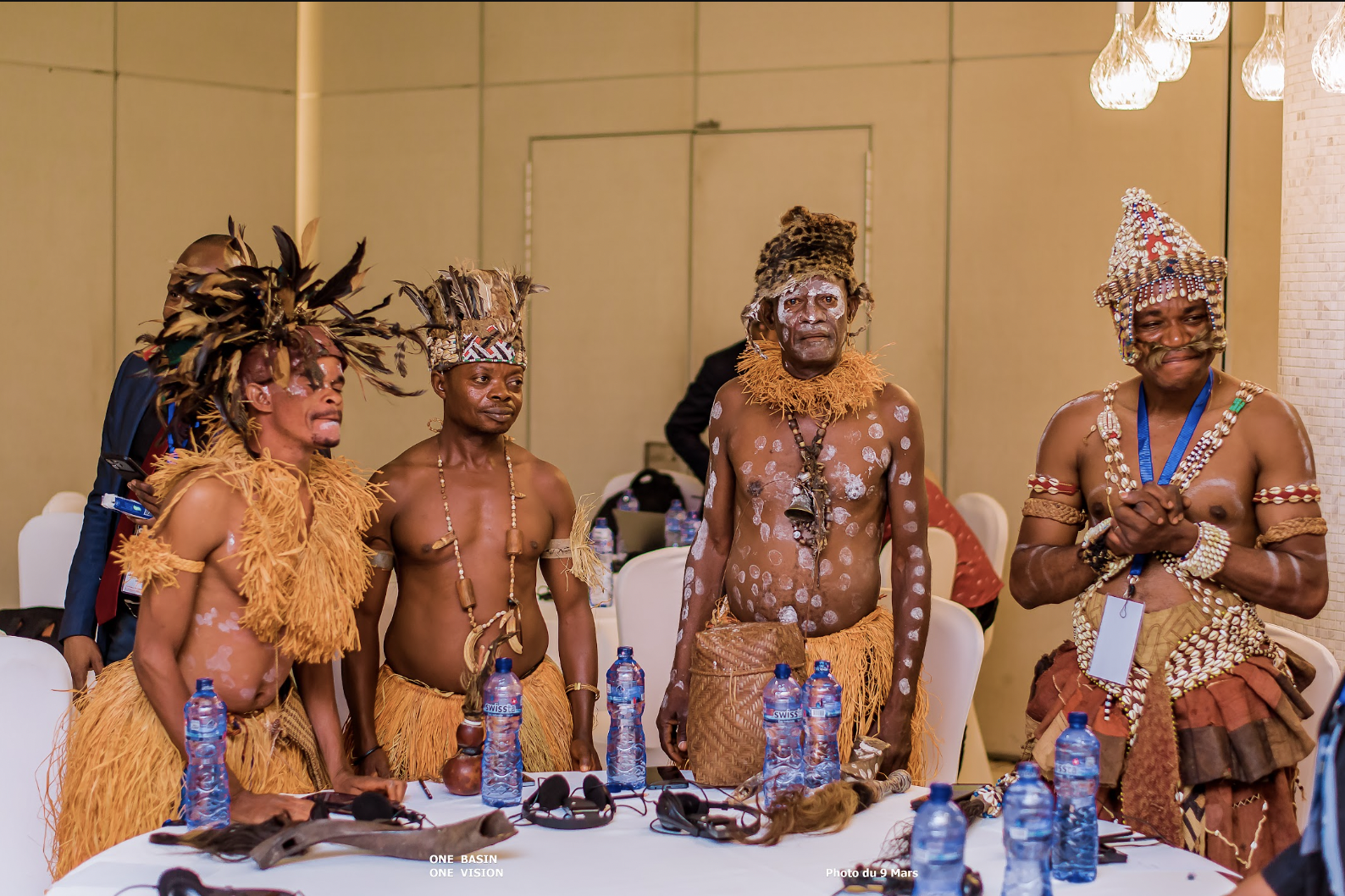
It is this long-term vision which shaped the recent “One Basin, One Vision: The Congo Basin’s Path to Rights, Livelihoods, and Impact Towards 2030” convening in Kinshasa. Co-organized by RRI, CLARIFI, and REPALEAC, the gathering reflected on more than a decade of collective engagement in the region, marked by sustained advocacy for legal reform in complex political contexts.
The gathering opened with a regional learning exchange among CLARIFI partners working across the basin on March 9–10, 2026. Participants compared approaches to project implementation, discussing both achievements and persistent challenges, with exchanges focusing on organizational strengthening, women-led initiatives, and peer learning.
As part of the exchange, partners also shared lessons grounded in their day-to-day work during a panel hosted by CLARIFI Director Deborah Sanchez. These insights brought to the surface what it takes to translate principles into practice on the ground. Key lessons included:
1. Free, Prior, and Informed Consent processes, combined with strong conflict management, are essential for maintaining community cohesion during and after projects.
2. Collaboration with political, administrative, and customary authorities strengthens mobilization, advocacy, and implementation.
3. Engaging neighboring communities helps prevent conflict and supports long-term sustainability.
4. Using local languages improves understanding, participation, and meaningful consent.
5. Transparency and clear information sharing build trust among communities and stakeholders.
6. Local focal points are critical for maintaining access and continuity in remote areas.
7. Projects aligned with community priorities generate stronger ownership and long-term support.
8. Multi-stakeholder collaboration increases impact and creates valuable synergies.
9. Flexibility and adaptive planning are essential in unstable or rapidly changing contexts.
10. Gender inclusion requires intentional and inclusive communication to ensure broad community support.
11. Participatory tools, such as community mapping, help design realistic and locally grounded interventions.
The exchange also created space to identify common priorities and generate practical recommendations for future work. A central takeaway emerged: there is no one-size-fits-all model. Progress depends on adapting to local contexts, building trust over time, and supporting leadership that reflects the diversity of communities.
Discussions also focused on regional coordination mechanisms, with participants exploring how to better align efforts, strengthen partnerships, and develop financing approaches that ensure resources effectively reach Indigenous Peoples and local communities in the Congo Basin. A dedicated panel with donors created space for open and constructive dialogue on improving access to funding, with a strong emphasis on accessibility. Encouragingly, the discussion highlighted that concrete plans are emerging to deliver on global commitments to finance initiatives in the region. This reinforced a shared sense of both momentum and accountability.
From March 11–12, 2026, the convening expanded beyond CLARIFI partners, to bring together Indigenous and local community leaders, government representatives, and institutional partners from across the region, to align around a shared vision for 2030. The Strategic Partnership and Donors Forum featured the unveiling of REPALEAC’s ambitious 2030 Vision to strengthen Indigenous and local community leadership across the region.
A clear message emerged from the variety of exchanges throughout the week: achieving shared priorities around conservation, land rights and livelihoods will require translating commitments into sustained, accessible, and equitable funding for Indigenous Peoples and local communities.


